Volume 22, Issue 9, September 2026 |
|
|||||||||||||||||||||||||||||||||||||
|
|||||||||||||||||||||||||||||||||||||
Volume 22, Issue 8, August 2026 |
|
|||||||||||||||||||||

The analysis performed in this report is solely the author’s work and his opinion.
…

A Conversation with Professor Bin Jiang
Dr. Bin Jiang
Professor of Urban Informatics, Director of LivableCityLAB, Master of Wholeness College. Thrust of Urban Governance and Design, The Hong Kong University of Science and Technology (Guangzhou), Guangzhou 510000, China
Editorial note on terminology
In this essay, the concept of Living Structure is understood as comprising two inseparable dimensions: “living” …

Why the UN decision matters beyond the mercator debate
Georg Gartner
President, International Cartographic Association
In September 2026, the United Nations General Assembly brought an unusually cartographic question onto the global political stage. By 164 votes to one, with six abstentions, Member States adopted a resolution encouraging the use of map projections that more accurately represent the relative …
HydroGNSS data open for new insights into Earth’s wáter
The European Space Agency’s (ESA’s) two-satellite HydroGNSS Scout mission has completed commissioning and is now in full scientific operations.
Following extensive testing and validation of the satellites, instruments and ground segment, HydroGNSS data are now freely available to users worldwide, opening new opportunities to advance our …
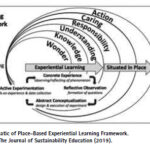
A GIS-enhanced curriculum for sustainable planning and socio-economic transformation in northern cape, South Africa
Dr. Tolulope Ayodeji Olatoye
Lecturer and Post-Doctoral Research Fellow in Geography at Sol Plaatje University, Kimberley, South Africa.
Dr. Raymond Nkwenti Fru
Head of Department, Human Science Teaching at the Faculty of Education, Sol Plaatje University, Kimberley. South Africa
Abstract
The Northern Cape province of South Africa …


 |
Introduction To Geodesy... |
 |
This comprehensive book charts the course of NSDI journey in India, which is still continuing... |
 |
“The problem of GNSS disruptions will never be solved, but it can be much better managed”
Dana A. Goward |