


For the blind and partially sighted the visual cues which are a significant part of monitoring the environmental flow are either severely limited or non-existent. Thus the challenge is to be able to use man-made sensors and technology such as the smart phone based sensors to assist such individuals in monitoring the environment and collecting cues/ data about the environmental flow.

Mumbai, the commercial and financial capital of India has seen two major terrorist attacks in last two decades; once in 1993, when Mumbai rocked in a series of blast and second time in November 2008 when Mumbai faced a fidayeen attack where less than a dozen terrorists held the city at ransom for almost 60 hours.

Consciously or not, all humans are navigators, so it is without wonder that satellite navigation has swiftly become a backbone of modern civilisation. All of the sudden, situation awareness and management become significantly improved by introduction of the helpful and inexpensive technology that provides positioning services of unprecedented quality.

This paper summarizes the pre-signals before the earthquake which may be important information for predicting the occurrence of earthquakes as well as the crustal movement after the earthquake. At last a case study of simulation of future catastrophic earthquakes and Tsunami which may happen in coming a few hundred years by using archeological excavation data of the past great earthquakes
Established in 1994, the Hungarian Association for Geo-information HUNAGI is a non-for-profit, non-governmental umbrella organisation with the mission goal to encourage and facilitate the availability, accessiblity, share and useability of geographic information according to the EU INSPIRE directive. To achieve the goals HUNAGI provides forums for industry stakeholders and relevant governmental entities and other learned societies to build partnership which can benefit fom use of geosptial data and related technologies.
The U.S. Army Geospatial Center (AGC) and Engineer Research and Development Center recently released the Hydrologic Data Resources Application (HyDRA) – a Web-based data survey and analysis tool created to provide the Dept. of Defense (DoD) logistics and geospatial intelligencerelated water communities with information on water resources data collection, visualization and dissemination in a mobile, enterprise-enabled environment. HyDRA allows users to view, collect and edit unclassified water resources features via Android 2.2+ OS smart devices using Google MapsTM and Google EarthTM applications.
According to ABI research report, the market for radio frequency identification (RFID) transponders, readers, software and services will generate USD 70.5 billion from 2012 to the end of 2017. The market was boosted by a growth of USD 900 million in 2011 and the market is expected to grow 20 percent YOY per annum. Government, retail, and transportation and logistics have been identified as the most valuable sectors, accounting for 60 percent of accumulated revenue over the next five years.
June 2012:
Hexagon 2012, 4 -7 June, Las Vegas, USA;
The International Summer School on Mobile Mapping Technology 2012,
11 – 15 June, Tainan, Taiwan, http://conf.ncku.edu.tw/mmt2013/intro01.htm;
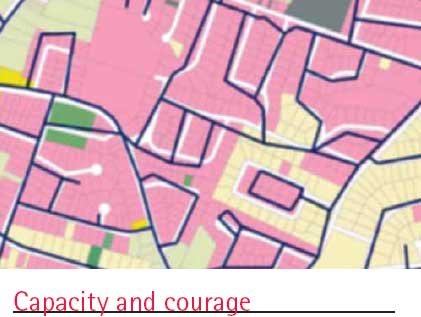
It was all about land. At the World Bank’s Land and Poverty conference (April 23- 26, 2012 Washington DC).
Where Access, ownership, reforms and rights. Acquisitions, regulations and legalities. Revenue, corruption,
administration and governance. People, poverty, policies and practices.

Rapid Eye imagery is being used by the MALAREO project to assist with malaria control programs in countries in southern Africa. While mosquitoes can obviously not be observed via satellite, their habitats, which are considered malaria risk areas, can be. The MALAREO project, funded by the European Commission under FP7, is a mixed European-African consortium which incorporates years of experience in malaria control with the Global Monitoring for Environment and Security (GMES) EO capacity.



 (5.00 out of 5)