


April 2011, 6th National GIS Symposium in Saudi Arabia
24-26 April, Khobar, Saudi Arabia, www.saudigis.org
India terminates S-band contract
As allegations of wrongful allocation of S-band frequencies for radio waves to a private company is mounting pressure on the Government of India, the government decided to terminate the controversial contract with Bangalore-based Devas Multimedia. It also claimed that it had not incurred any financial losses because of the contract. But the Department of Space conceded it had not fully informed the Cabinet that G-SAT6 and G-SAT6A satellites it intended to launch were meant primarily for use by Devas Multimedia.
NovAtel announces SMARTMR15™ GNSS Receiver/Antenna
NovAtel released its new SMARTMR15 antenna. It builds on last year’s successful launch of NovAtel’s SMART-MR10 GNSS receiver/antenna. Speaking to Coordinates Mr . Ben Greenwood, Product Manager, Enclosures, NovAtel Inc. explains about the new receiver antenna
UN proposes global geospatial information mechanism
“There is general agreement of an urgent need for an inter-government consultative mechanism that can play a leadership role in setting the agenda for the development of global geospatial information, and to promote its use to address key global challenges; to liaise and coordinate among member states, and between member states and international organizations,” according to a statement by the United Nations (UN). During a meeting on Global Geospatial Information Management (GGIM), Cochair Hiroshi Murakami said while there are various international organisations that have been working on geospatial information, the UN feels that there is a need for an official mechanism that would link the outcomes of such organisations to specific policy decisions and actions of member states. www.futuregov.asia

Whenever there is a need for continuous navigation, radio-technical systems are usually integrated with inertial navigation systems (INS) or dead-reckoning systems (DR). Due to large dimensions and power consumption, as well as high prices, INS systems have been traditionally applied in high-end or military applications. Recently an unprecedented decrease of all the above mentioned factors have been witnessed, making inertial navigation suitable for a wider set of applications. However, the dead-reckoning method is still the preferred choice in low-cost land navigation systems.

The Indian Naval Hydrographic Department, with its rich traditions in the field of hydrography, wide ranging experience, a good infrastructure coupled with an excellent Human Resource, has the entire requisite wherewithal to be ranked amongst the best in the world. This has not happened overnight; the initial foundations have been laid by our predecessors and we who man and run the department now have been blessed by a good beginning. In the last five years, we have only added on to its already established stature.
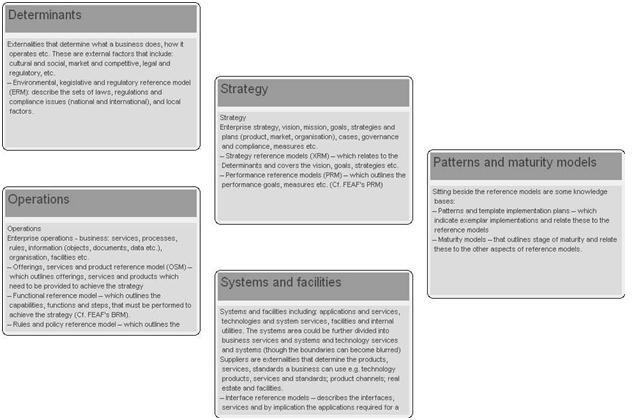
Best practice implementations needs to reflect experience: with cost effective world leading operational national systems; several generations of change i.e. experience with different models of private sector and public sector collaboration; in creating and extending systems of policy, regulation and governance; of the affects of different governance regimes, cultures and from international programmes. They therefore need to cover:
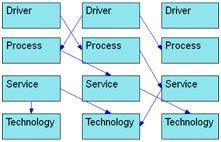
“The first man who, having fenced in a piece of land, said, ‘This is mine,’ and found people naïve enough to believe him, that man was the true founder of civil society.” (from Discours sur l’Origine et le Fondement de l’Inégalité Parmi les Hommes, 1754, – Jean-Jacques Rousseau)
March 2011
International Hydrographic Seminar
3 – 4 March
Delhi, India
www.hydrobharatnic.in/HYDROIND_2011.htm
GEOFORM-2011
15-18 March
Moscow, EcoCentre Sokolniki
www.geoexpo.ru/defaulteng.stm

In a modern mobile mapping system, the navigation component usually consists of a GPS receiver and an inertial navigation system (INS), which can provide accurate geo-referencing to the imaging sensors [1][2]. To achieve centimetre-level positioning accuracy, RTK-GPS is a natural choice. However, RTK-GPS in urban areas suffers from frequent outages due to blockages of either the GPS signals or the reference station radio links. In addition, multipath from buildings, trees and heavy vehicles could degrade the accuracy of the GPS when the vehicle is near them.






 (5.00 out of 5)