
Articles in the SDI Category


The Sultanate of Oman is located in the South-East of the Arabian Peninsula along the latitude (16°40´ and 26° 20´) North, and longitude…

There is a growing emphasis on sustainable management of natural resources and preservation of environment due to the realization that these are vital to our socio- economic development. Citizens have to be provided with better quality of life, health care and education.

During the ultra-communist Khmer Rouge regime (1975-79) in Cambodia, the private ownership of land was abolished and it remained unrecognized also during the following 10-year long Vietnamese-backed Communist government (1979-89). All land-related documents, including the land register, maps and geodetic networks were systematically destroyed as well as most professionals and educated people eliminated during the tragic 1975-79 period.
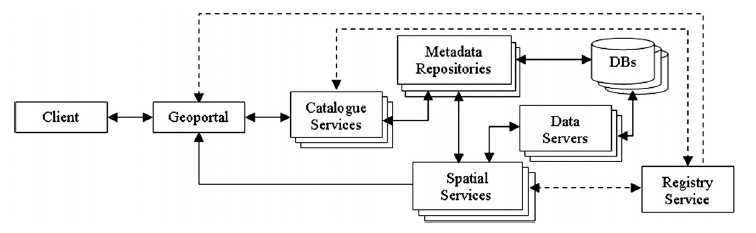
This network is being developed based on national
standards to facilitate the connection of that with the networks of other countries
at the regional/global levels. This paper aims to describe the architecture of the
clearinghouse network and activities for the development of that.

Significantly, this was the first annual conference that dedicated a specific stream to spatial information. The full day workshop convened by the International Federation of Surveyors (FIG) and the World Bank “Spatially Enabling Government and Societies (SEGS) for Sustainable Land Administration and Management” was an excellent complement to the overall conference theme on land governance.

Infrastructure is basic physical and organizational structure needed for the operation of a society. These are a set of interconnected structural elements of services and facilities that provide framework supporting an entire structure of development necessary for an economy to function.

By definition, ‘spatial enablement in action’ means that we (governments) must make our spatial information “actionable”. That is, it must be used and leveraged beyond just for mapping. It must form the enduring fundamental authoritative spatial data layers of a nation, and do so in a way so that it is able to support evidence-based decision making for the many social, economic and environmental drivers challenges that face our Governments. It is incumbent on us doing so. Should we not do so, we seriously risk “spatial stagnation”, and have a rich resource of geoinformation that remains largely untapped and with significant unrealised potential.

The Global Spatial Data Infrastructure SDI Cookbook defines SDI as the “… collection of technologies, policies and institutional arrangements that facilitate the availability of and access to spatial data.” This definition (which predates the cookbook) is more than fifteen years old, and over the course of fifteen years much progress has been made toward the SDI vision of abundant, easily shared, easily used geospatial information.

The economic and social development in the Sultanate of Oman during and after 1970 became the basis of assessment and planning to identify priorities of national development. For this, the role of geographic data to support sound decisionmaking has been considered important to support development programmes. Thus, the framework of dataset or the fundamental data in the Sultanate needs to clearly identify what constitutes the basic data used and produced by the government and private institutions.

There is a general consensus among the land administration professionals and different players of the economy in the developed countries and more and more in the developing world as well, that the Land Administration is one of the most important infrastructure for the economic growth and the implementation of sustainable development. This fact is proved by statistical data.





 (5.00 out of 5)